

Mobile proxies are the best choice for TikTok. They use real mobile carrier IPs, making them highly reliable and less likely to be flagged. If you’re managing accounts, bypassing geo-restrictions, or automating tasks, mobile proxies provide the highest level of trust. However, they are the most expensive option.
Residential proxies are a solid middle-ground. They mimic home network IPs, offering good reliability and lower detection risks at a more affordable price. These are great for managing multiple accounts or scraping data without breaking the bank.
Datacenter proxies are the cheapest and fastest but come with higher detection risks. They work well for light tasks like browsing or initial research but are less suitable for sensitive activities.
Quick Comparison
| Proxy Type | Best For | Cost | Detection Risk | Speed |
|---|---|---|---|---|
| Mobile | Managing accounts, automation | High | Very Low | Moderate |
| Residential | Scraping, account management | Moderate | Low | Moderate |
| Datacenter | Browsing, initial research | Low | High | Fast |
Choose based on your needs and budget. Mobile proxies are the safest, residential proxies balance cost and reliability, and datacenter proxies are budget-friendly but riskier.
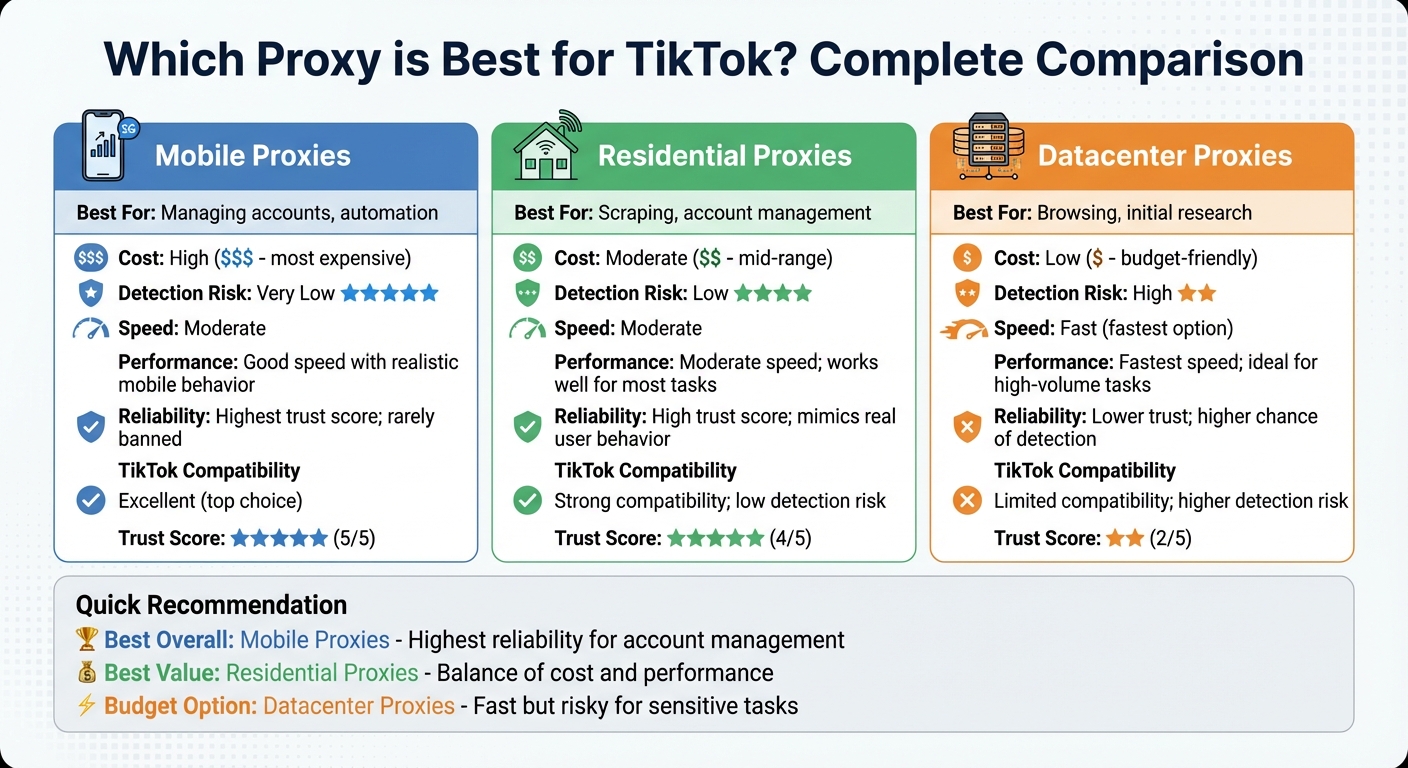
TikTok Proxy Types Comparison: Mobile vs Residential vs Datacenter
Best TikTok Proxies | How To Never Get Blocked?
1. Residential Proxies
Residential proxies work by using IP addresses tied to real home networks, making them look like genuine users to TikTok's security systems. This makes them far less likely to be detected or blocked compared to datacenter proxies.
These proxies are dependable, offering steady and long-lasting connections that imitate regular user activity. This is especially useful when managing multiple TikTok accounts, as the natural traffic pattern minimizes the risk of detection. Their ability to maintain high levels of anonymity makes them ideal for tasks like account management, scraping, and targeting specific locations.
Another plus? Residential proxies are often a budget-friendly option, making them a smart solution for bypassing TikTok's restrictions. Up next, we'll dive into mobile proxies and how they bring their own unique advantages to TikTok management.
2. Mobile Proxies
Mobile proxies work by using IP addresses assigned by real carriers like Verizon and Vodafone. These proxies simulate actual mobile data usage, which makes them highly reliable and less likely to be flagged or banned by websites. This setup also helps bypass geo-restrictions, making them perfect for tasks like account management and content scraping.
However, this level of reliability comes at a cost. The premium infrastructure required for mobile proxies makes them more expensive than other options. Still, for users who prioritize trustworthiness and minimizing detection risks, they are often worth the investment. Up next, we’ll look at another proxy type that balances performance and cost differently.
sbb-itb-ea6392c
3. Datacenter Proxies
Datacenter proxies are known for their speed and efficiency. Operating on powerful servers, they can handle a massive number of requests with minimal delays. If you're looking to scrape large datasets or manage multiple accounts simultaneously, these proxies can provide the performance you need.
Another big plus? Affordability. Datacenter proxies are usually much cheaper than residential or mobile proxies. This makes them a great option for those working within a tight budget or experimenting with TikTok strategies before committing to larger-scale operations. But, as with anything, it’s important to weigh these benefits against TikTok’s strict security measures.
Here’s the catch: TikTok's bot-detection systems. Because datacenter proxies don’t originate from real devices, they’re more likely to be flagged. This can lead to temporary blocks or even account restrictions, especially if you’re managing multiple profiles or engaging in automated activities.
When it comes to reliability, it really depends on what you’re doing. For light tasks like browsing TikTok or conducting minimal research, datacenter proxies work just fine. But for more sensitive activities like managing accounts or posting content, the risk of detection often outweighs the advantages of speed and cost.
Advantages and Disadvantages
Here’s a breakdown of how different proxy types perform when used with TikTok:
| Proxy Type | Performance | Reliability | TikTok Compatibility | Pricing |
|---|---|---|---|---|
| Residential | Moderate speed; works well for most tasks | High trust score; mimics real user behavior | Strong compatibility; low detection risk | Mid-range; usually more expensive than datacenter |
| Mobile (4G/5G) | Good speed with realistic mobile behavior | Highest trust score; rarely banned | Excellent; considered the top choice for TikTok | Premium pricing; the most expensive option |
| Datacenter | Fastest speed; ideal for high-volume tasks | Lower trust; higher chance of detection | Limited compatibility; higher detection risk | Most affordable; budget-friendly option |
Each proxy type brings its own strengths and weaknesses to the table, depending on your needs.
Mobile proxies are widely regarded as the best choice for TikTok. They offer realistic mobile behavior and high anonymity, making them ideal for managing multiple accounts or handling automation tasks. However, this top-tier performance comes with a higher price tag.
Residential proxies strike a balance between cost and performance. They offer reliable compatibility and lower detection risks, making them a solid choice for most TikTok-related activities.
Datacenter proxies, on the other hand, are the fastest and most affordable. But their lower trust score and higher detection risk make them better suited for lighter tasks, such as casual browsing or preliminary research.
For long-term, consistent TikTok access, mobile and residential proxies are the preferred options. While datacenter proxies are cheaper upfront, their higher detection risks often negate the cost savings.
Conclusion
Choosing the right proxy for TikTok depends on your goals and budget. Mobile proxies stand out for their high trust scores and seamless compatibility with TikTok's detection systems. Residential proxies offer dependable performance with lower detection risks, while datacenter proxies are faster and more affordable but come with a higher chance of being flagged. Here's a quick breakdown of how each proxy type aligns with specific TikTok needs:
- Mobile proxies: Ideal for account management and automation. Their ability to mimic real mobile carrier IPs makes them highly effective against TikTok's anti-spam algorithms, even though they come at a premium price.
- Residential proxies: A solid choice for tasks like content scraping and market research. They balance reliability and cost efficiency, making them a practical option for long-term use.
- Datacenter proxies: Best for casual browsing or initial research. While they are faster and cheaper, they are more likely to encounter IP bans, making them less suitable for consistent, long-term access.
Ultimately, aligning your proxy choice with your TikTok strategy is key. Consider factors like usage frequency, geo-restriction requirements, and the importance of uninterrupted access. Investing in high-quality proxies can save you from the hassle of frequent IP changes and ensure smoother operations. As highlighted earlier, understanding the strengths and limitations of each proxy type is essential for bypassing TikTok's detection systems and achieving your platform goals.
FAQs
Why are mobile proxies the top choice for TikTok?
Mobile proxies are a popular choice for TikTok because they rely on IP addresses assigned by real mobile carriers. This makes them look more genuine and credible to the platform. As a result, these IPs generally have higher trust levels and are less likely to trigger bans or restrictions.
On top of that, mobile proxies work seamlessly with TikTok's systems, making them ideal for tasks like managing multiple accounts, bypassing location-based restrictions, or gathering content. Their dependable nature and ability to imitate real user activity make them a go-to solution for TikTok-related operations.
What’s the difference between residential and datacenter proxies?
Residential proxies operate through real devices, such as home computers or smartphones, using IP addresses provided by internet service providers (ISPs). This setup makes your online activity look like it’s coming from an actual household, offering greater reliability and reducing the likelihood of detection.
In contrast, datacenter proxies rely on IP addresses created by servers housed in data centers. They tend to be faster and more affordable but are also easier to identify and block because they don’t imitate the behavior of real users. Deciding between these options comes down to your priorities, whether it’s privacy, speed, or staying within a specific budget.
How does the cost of different proxy types impact their effectiveness for TikTok tasks?
The price of a proxy plays a big role in how well it works for TikTok-related tasks. Residential proxies and mobile proxies usually come with a higher price tag because they’re more dependable and can imitate real user activity. This makes them a great choice for tasks like managing accounts or bypassing location-based restrictions. On the flip side, datacenter proxies are often cheaper but carry a higher risk of detection, which can make them less suitable for certain TikTok activities.
When deciding on a proxy, think about what you need and how much you’re willing to spend. For instance, if you’re handling multiple accounts or gathering data, opting for a premium proxy type could provide better performance and added security. Striking the right balance between cost and functionality is essential for smooth TikTok access while keeping your privacy intact.