

Scraping Amazon product data is tough due to its strict anti-bot measures like IP blacklisting, rate limiting, and CAPTCHA challenges. Proxies help bypass these defenses by masking your IP, making your activity appear as if it's from real users. Here's a quick breakdown of the best proxy options for scraping Amazon:
- Residential Proxies: High success rates (95–99%) and excellent for avoiding detection, but slower (2.5–3.7 seconds) and more expensive ($3.50–$12.50/GB).
- ISP Proxies: A balance between speed (1.7–2.8 seconds) and reliability, with success rates of 85–95%. Costs range from $2.85–$5.50 per IP.
- Datacenter Proxies: The fastest (1.4–2.8 seconds) and cheapest option ($0.35/GB), but lower success rates (40–60%).
Key Insight: Choose residential proxies for stealth, ISP proxies for stability, and datacenter proxies for speed and cost-efficiency. Match proxy location to the Amazon marketplace you're targeting for accurate data.
Quick Comparison:
| Feature | Residential Proxies | ISP Proxies | Datacenter Proxies |
|---|---|---|---|
| Success Rate | 95–99% | 85–95% | 40–60% |
| Speed | 2.5–3.7 seconds | 1.7–2.8 seconds | 1.4–2.8 seconds |
| Cost | $3.50–$12.50/GB | $2.85–$5.50/IP | $0.35/GB |
| Best For | Price monitoring, reviews | Stable sessions, accounts | Bulk scraping, testing |
Proxies are essential for scraping Amazon effectively. Pair them with techniques like rotating IPs and introducing delays for better results.
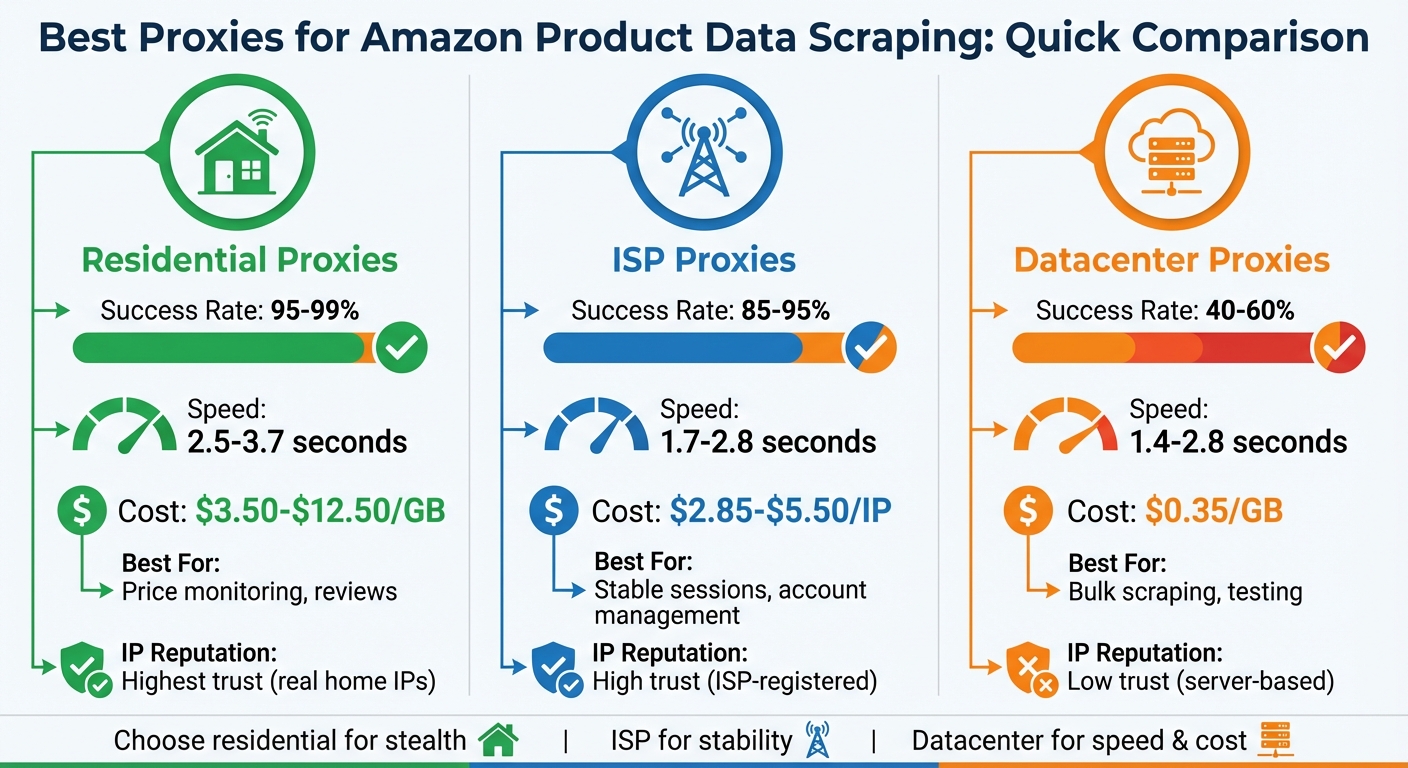
Amazon Proxy Types Comparison: Success Rates, Speed, and Cost
1. BirdProxies Residential Proxies
IP Reputation
BirdProxies residential proxies rely on ISP-assigned IP addresses, making their traffic appear as if it’s coming from real users. This approach helps evade Amazon's machine learning systems designed to detect automated scraping activity .
Block Rate
These proxies boast impressive success rates ranging from 97.05% to 99.5%, thanks to their ability to mimic genuine user behavior and bypass Amazon's bot detection mechanisms . They employ advanced rotation across millions of IPs and offer tools like CAPTCHA support and JavaScript rendering, which further minimize block rates. Additionally, their precise U.S. geo-targeting - down to the ZIP code or city level - ensures accurate region-specific results .
Performance Metrics
When it comes to performance, BirdProxies residential proxies balance speed with reliability. They record median latencies of 2.5–3.7 seconds, prioritizing higher success on complex targets over faster response times. Users can choose between rotating sessions for dynamic IP changes or sticky sessions for consistent, stable connections.
Cost
BirdProxies follows a bandwidth-based pricing model, starting at €5.00 (approximately $5.40) per GB. Discounts are available for larger volumes, with rates dropping to €4.75 per GB for 5 GB, €4.50 per GB for 10 GB, and €4.25 per GB for 25 GB. Features like instant activation and support for cryptocurrency payments make accessing their services quick and convenient. Up next, we’ll compare residential vs ISP proxies and dive into BirdProxies ISP proxies.
2. BirdProxies ISP Proxies
IP Reputation
BirdProxies ISP proxies rely on IP addresses provided by well-known ISPs such as Verizon, AT&T, or Comcast. This setup makes them resemble real residential connections, which helps them bypass Amazon's anti-bot systems while benefiting from the reliability of datacenter infrastructure. Essentially, they combine the authenticity of a home user connection with the stability of professional hosting.
Block Rate
When it comes to Amazon, ISP proxies generally achieve an 85–90% success rate. This places them between residential proxies, which boast a higher success rate of 95–99%, and datacenter proxies, which lag behind at 30–40%. While ISP proxies are less detectable than standard datacenter options, advanced anti-bot systems might still flag them as institutional connections. These proxies are particularly effective for operations that require static IPs, like managing Amazon seller accounts, without raising fraud detection alarms.
Performance Metrics
BirdProxies ISP proxies deliver impressive performance, with a median latency of 1.7–2.8 seconds - making them 3 to 4 times faster than residential proxies. They can handle over 150,000 requests with speeds exceeding 100 Mbps. Additionally, they support both HTTP(S) and SOCKS5 protocols, ensuring compatibility with a wide range of frameworks.
Cost
These proxies start at €1.30 per IP monthly (approximately $1.40), offering a budget-friendly option for stable, long-term connections. They include instant activation and support secure payment methods, including cryptocurrency. Ticket ISP Proxies are priced slightly higher at €1.35 per IP monthly, while Crypto and Sneaker ISP Proxies match the base price of €1.30 per IP. All plans provide access to reliable German IP addresses and come with a user-friendly dashboard for easy management. Up next, we’ll take a closer look at BirdProxies Datacenter Proxies for a complete comparison.
3. BirdProxies Datacenter Proxies
IP Reputation
BirdProxies Datacenter Proxies rely on cloud-based IPs, such as those from AWS and Google Cloud. However, these IPs don’t carry the same level of trust as residential networks. Platforms like Amazon often identify and flag these non-residential patterns, sometimes blacklisting entire subnets to prevent misuse.
Block Rate
When it comes to success rates, datacenter proxies fall short compared to residential and ISP proxies. They typically achieve a 40–60% success rate, whereas residential and ISP options range between 85–99%. Amazon detects these proxies by analyzing request headers and monitoring usage patterns, like request frequency. To avoid IP blocks, users can introduce randomized delays (1–5 seconds) and rotate IPs frequently, which helps bypass detection systems.
Performance Metrics
Datacenter proxies excel in speed, with a median latency of 1.4–2.8 seconds. This makes them a great choice for tasks that require rapid, bulk data scraping. They’re 3 to 4 times faster than residential proxies, making them particularly effective for targeting less-protected pages where speed is more critical than stealth.
Cost
When it comes to affordability, BirdProxies Datacenter Proxies are the most budget-friendly option for Amazon scraping. Pricing is typically based on either the number of IPs or flat-rate bandwidth plans, which makes them an excellent choice for high-volume projects with limited budgets. While their success rates can’t compete with residential or ISP proxies, their speed and low cost make them a practical option in scenarios where a higher block rate is acceptable. For projects prioritizing fast data collection over stealth, this balance of cost and performance makes datacenter proxies a strong contender.
sbb-itb-ea6392c
How To Do Web Scraping Amazon With Scrapy | Proxies API
Pros and Cons
When comparing residential vs ISP proxies or datacenter options, think about what matters most: higher success rates, faster speeds, or staying within a budget. The table below breaks down the main differences to help you decide.
Residential proxies use real home IPs, offering an impressive success rate of 95–99% and minimizing the chances of being blocked. However, they’re slower, with response times averaging 2.5–3.7 seconds, and come with a premium price tag ranging from $3.50 to $12.50 per GB. If avoiding CAPTCHAs and ensuring smooth data collection are your top priorities, the higher cost might be worth it.
ISP proxies strike a balance between speed and reliability. They combine fast datacenter-like performance with the credibility of residential IPs. With median latency of 1.7–2.8 seconds and success rates of 85–95%, they’re a solid choice for tasks that require consistent IP addresses, such as account management or long scraping sessions. Costs are moderate, running between $2.85 and $5.50 per IP.
Datacenter proxies are all about speed and cost-efficiency. Priced as low as $0.35 per GB, they deliver the fastest performance (1.4–2.8 seconds). However, their success rates are lower, ranging from 40–60%, making them better suited for bulk scraping or testing scripts where occasional blocks are acceptable.
| Feature | Residential Proxies | ISP Proxies | Datacenter Proxies |
|---|---|---|---|
| IP Reputation | Real home IPs (highest trust) | ISP-registered (high trust) | Server-based (low trust) |
| Block Rate | Lowest (95–99% success) | Low to Medium (85–95%) | Highest (40–60% success) |
| Performance | Slower (2.5–3.7s) | Fast (1.7–2.8s) | Fastest (1.4–2.8s) |
| Cost | $3.50–$12.50/GB (highest) | $2.85–$5.50/IP (moderate) | $0.35/GB (lowest) |
| Best For | Price monitoring, reviews | Account tasks, stable sessions | Bulk scraping, testing |
Conclusion
Selecting the right proxy type depends on your specific scraping needs and budget. For activities like price monitoring, gathering product reviews, or large-scale data scraping where Amazon's defenses are toughest, residential proxies are your best bet. They offer success rates of 95–99% and help you stay undetected, though they come with a higher price tag.
If your work involves long-term, stable sessions - such as managing seller accounts or tracking inventory over time - ISP proxies strike a great balance. They deliver fast and reliable performance at moderate costs, making them ideal for maintaining a consistent identity without frequent IP changes.
On the other hand, datacenter proxies are a budget-friendly option for tasks like testing scripts, scraping less-secured pages, or handling high-volume projects. Priced at just $0.35 per GB, they’re cost-efficient but come with lower success rates and less reliability.
To optimize your scraping efforts, pair your proxy choice with smart techniques. Introduce request delays (1–5 seconds) and rotate headers to avoid detection. Also, align your proxy's location with the Amazon marketplace you're targeting - for example, use US proxies for Amazon.com or German IPs for Amazon.de - to get accurate regional data on pricing and availability.
As Amazon continues to refine its defenses, adapt your strategies to maintain consistent data collection. By combining the right proxy type with thoughtful tactics like throttling and header rotation, you’ll maximize your chances of uninterrupted access to the information you need.
FAQs
What are the main advantages of using residential proxies for scraping Amazon product data?
Residential proxies offer IP addresses tied to real Internet Service Providers (ISPs), making your web scraping efforts resemble ordinary user activity. This subtle disguise helps you sidestep Amazon’s anti-bot measures, reducing the likelihood of CAPTCHAs or bans, and ensures smooth, uninterrupted data gathering.
These proxies allow you to rotate through millions of unique IPs, making each request appear as though it’s coming from a different user. This not only enhances your anonymity but also provides access to location-specific data, such as products exclusive to Amazon US or Amazon DE. The result? A broader and more accurate dataset.
On top of that, residential proxies act as a protective barrier for your actual IP address. They reduce the risk of blacklisting, safeguard your operations, and deliver consistent performance. With their help, you can achieve fast, reliable requests while keeping sensitive information secure.
What makes ISP proxies a reliable and fast option for scraping Amazon product data?
ISP proxies strike the perfect balance between speed and dependability for scraping Amazon data. These proxies utilize IP addresses assigned by real Internet Service Providers (ISPs) but operate on high-performance datacenter infrastructure. This combination offers the rapid connection speeds typical of datacenter proxies while retaining the authenticity of residential IPs, reducing the chances of detection by Amazon's anti-bot systems.
With static, high-throughput connections, ISP proxies deliver low latency and consistent performance, avoiding the delays that often come with rotating residential proxies. This reliability makes them ideal for large-scale tasks like frequent price monitoring or inventory updates, all without raising red flags. By blending datacenter-level speed with the credibility of ISP-assigned IPs, ISP proxies offer a reliable and efficient way to scrape Amazon product data.
Why are datacenter proxies still a popular choice for Amazon scraping despite their lower success rates?
Datacenter proxies are widely used for tasks that demand fast performance and large-scale data scraping. Known for their low latency - usually ranging from 1.4 to 2.8 seconds - they excel at managing bulk requests with ease, making them perfect for operations where timing is critical.
Although they might have a slightly lower success rate due to being easier to detect, their affordability and capacity to handle massive data volumes efficiently make them a popular choice for large-scale scraping projects.